| What's New | Company Profile and Representation | Air/Steam Hammers and Accessories | Hammers in Action | Knowledge Base | Information Requests |
![]() |
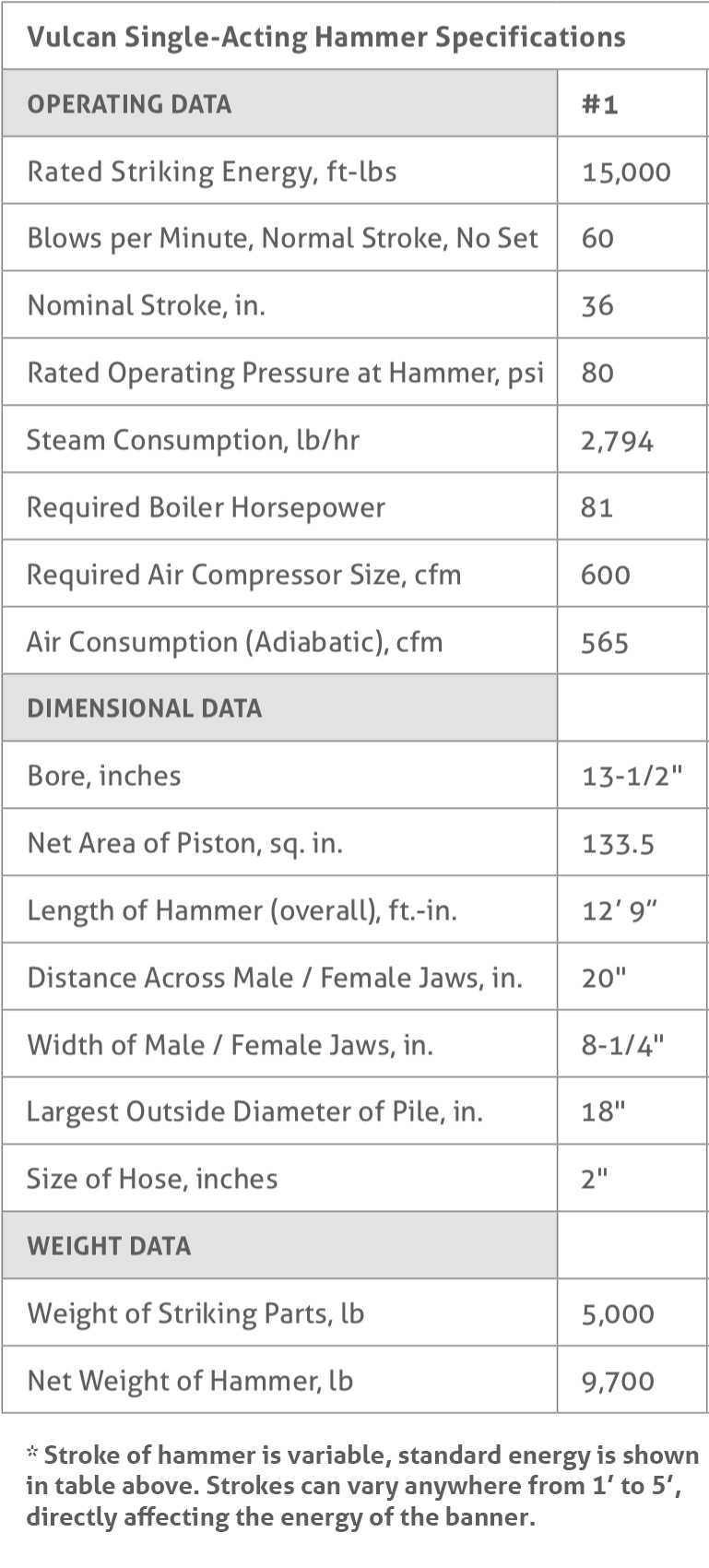
In 1887, Vulcan manufactured and sold the first #1 hammer, the
beginning of a long line of air/steam hammers. Today the Vulcan air/steam driven pile
hammers represent a century of development, refinement, and improvement while still
adhering to the basic concept of a hammer that is basically free of persistent breakdown,
thus avoiding expensive and embarrassing delays. The result of all of this is the long
standing reputation of the Vulcan air/steam hammer for reliability and pile driving
capability. In addition to the characteristics of the hammer itself, the owner is backed
up by a system of both stocking and servicing dealerships and a comprehensive factory
sales and service system. These together meet the needs of the contractor whenever and
wherever service is needed.
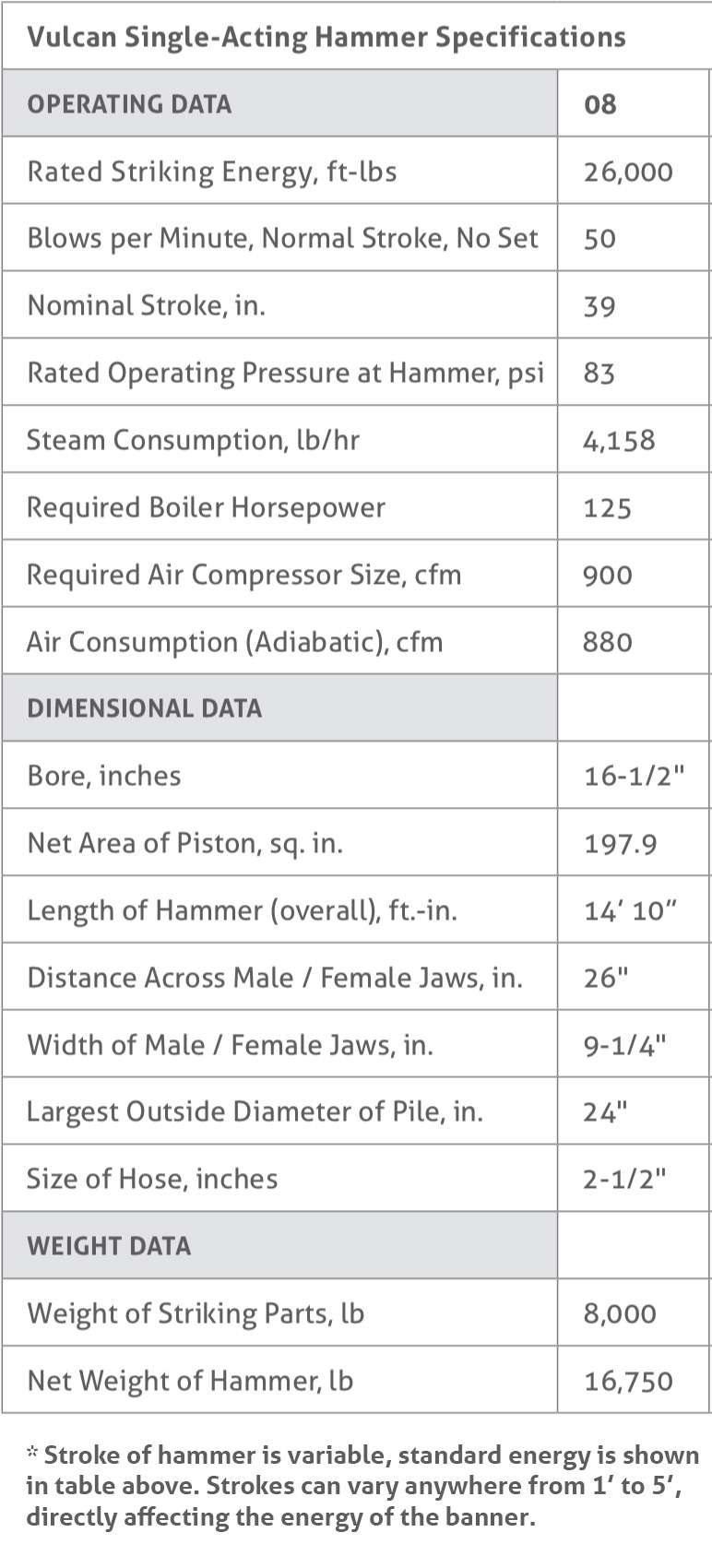
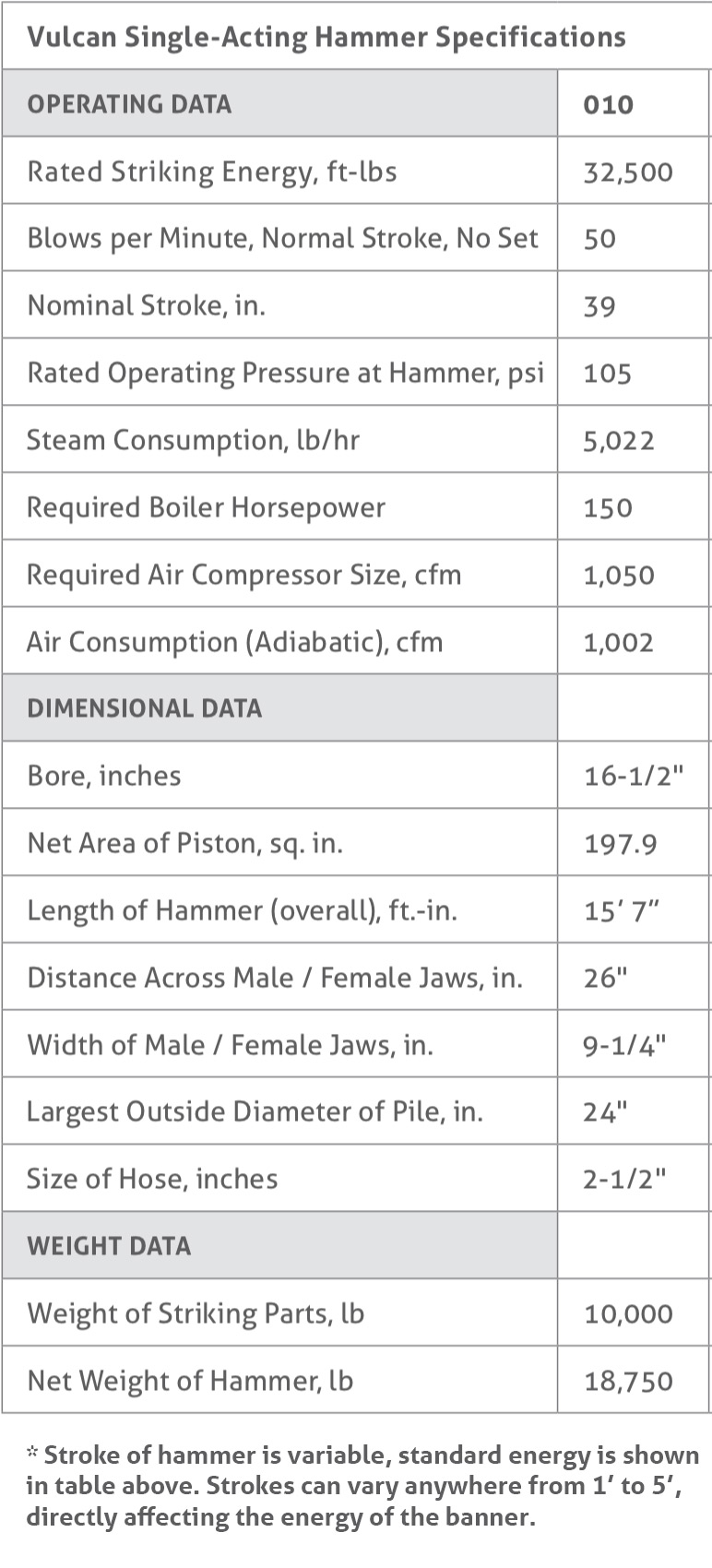
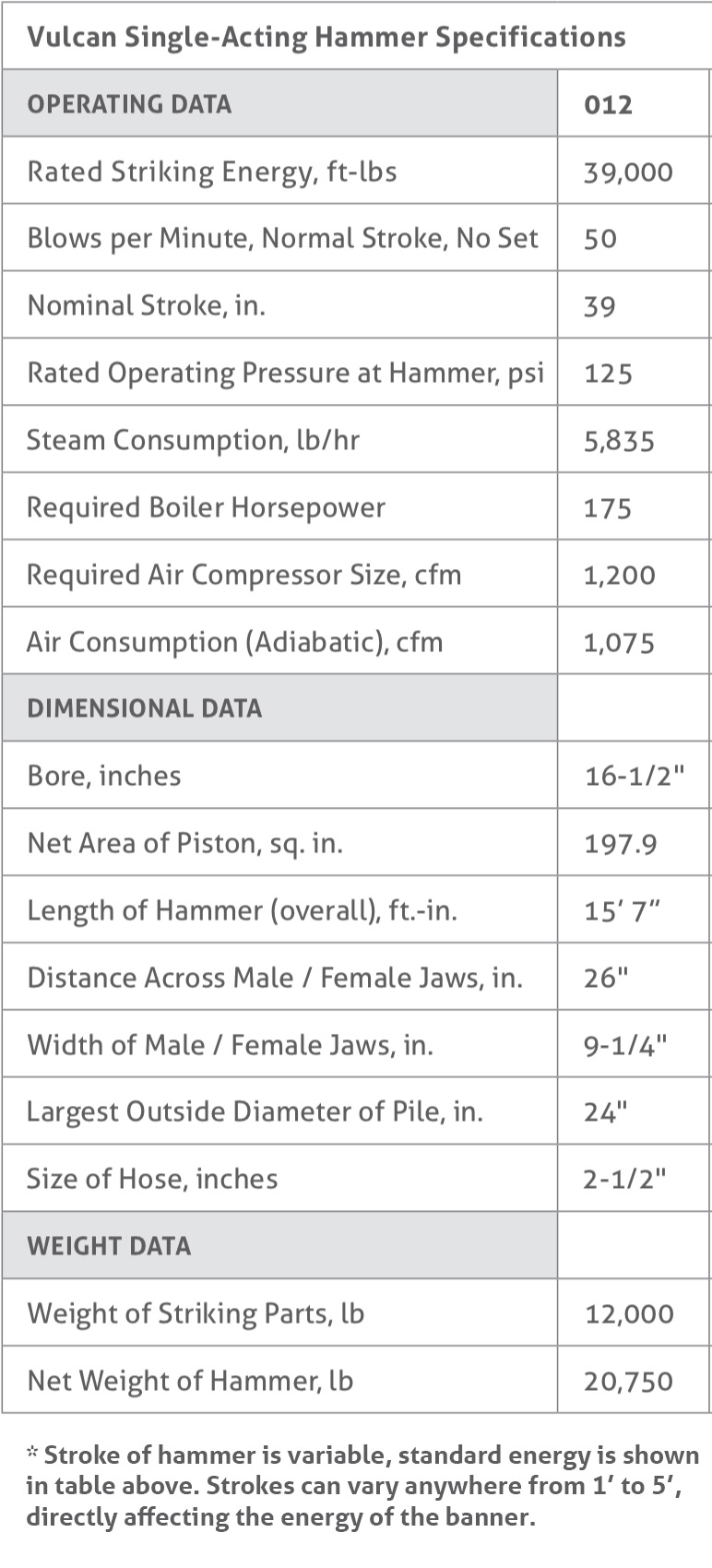
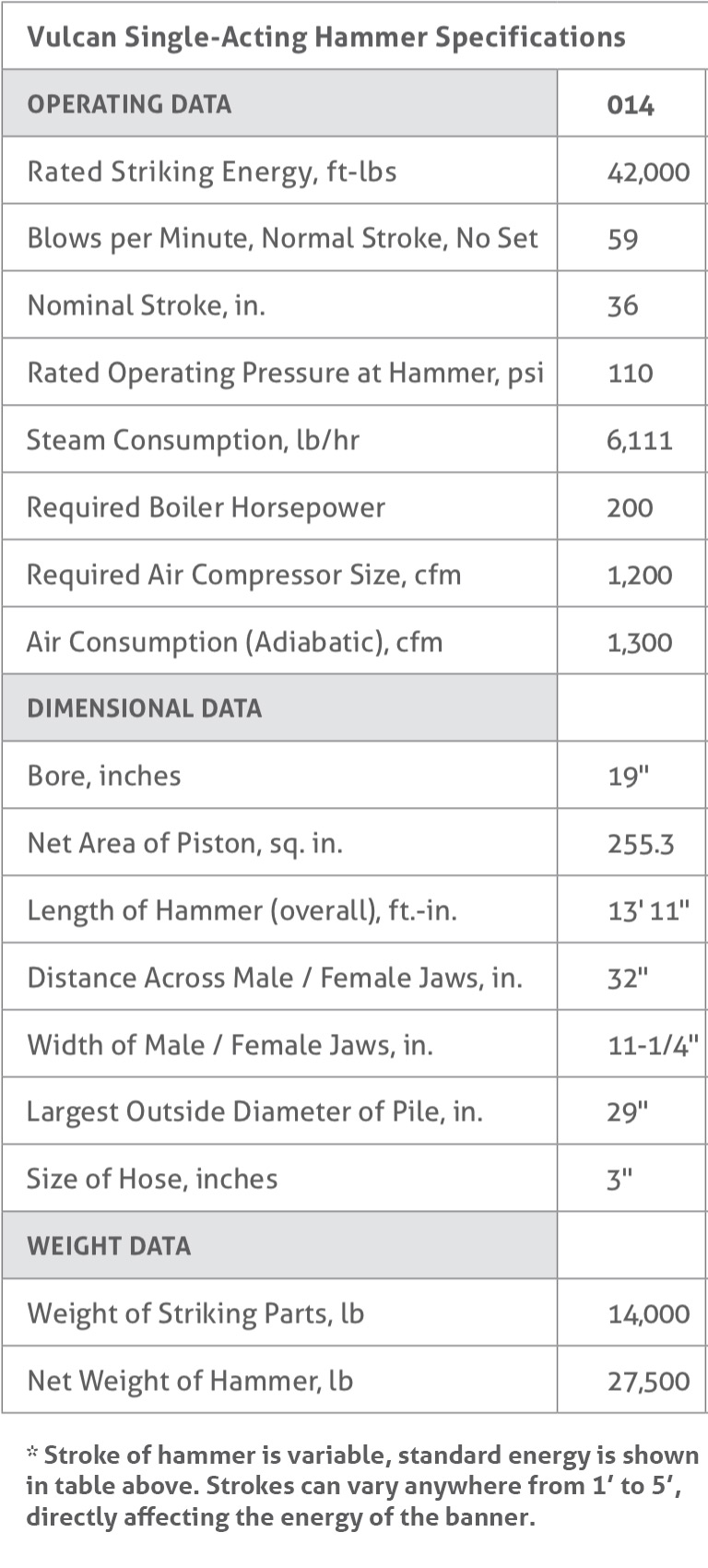
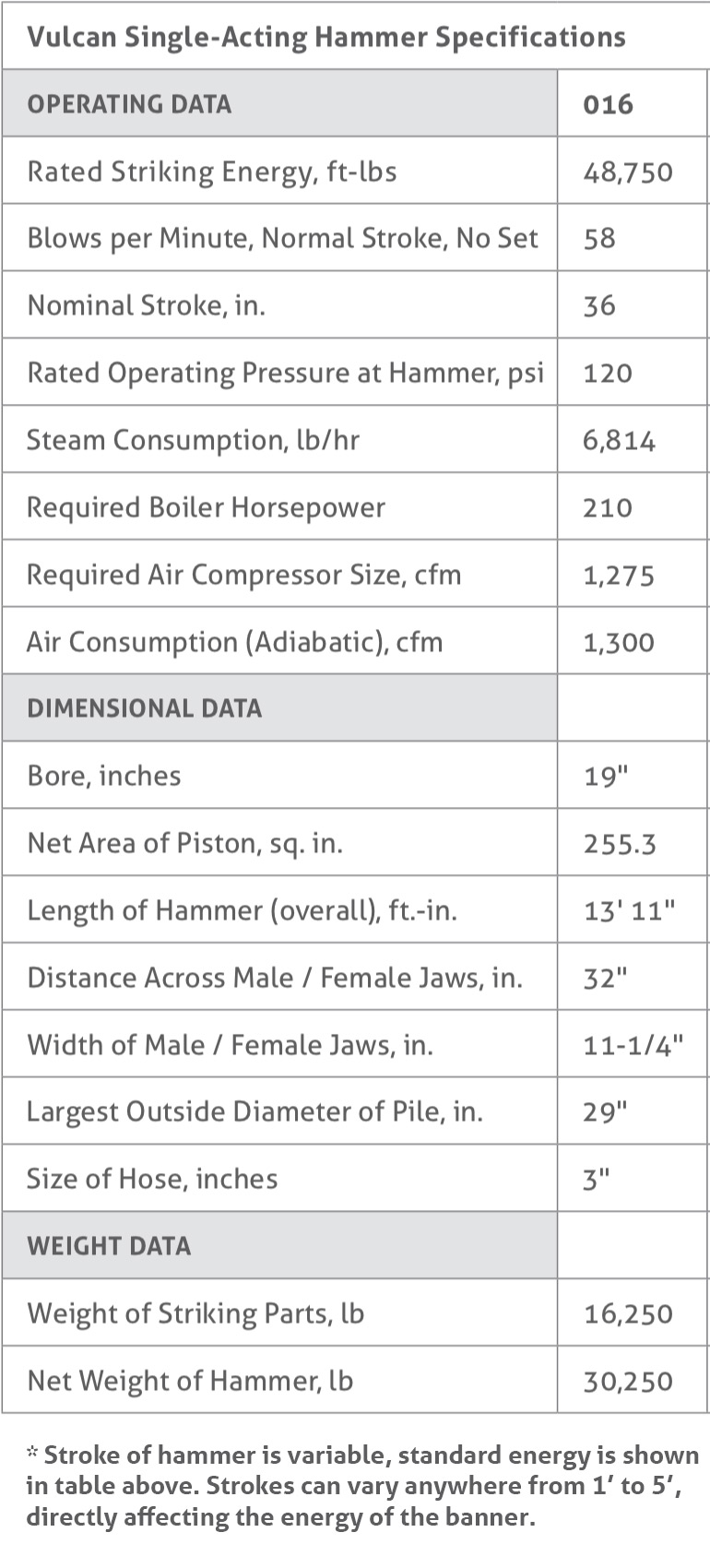
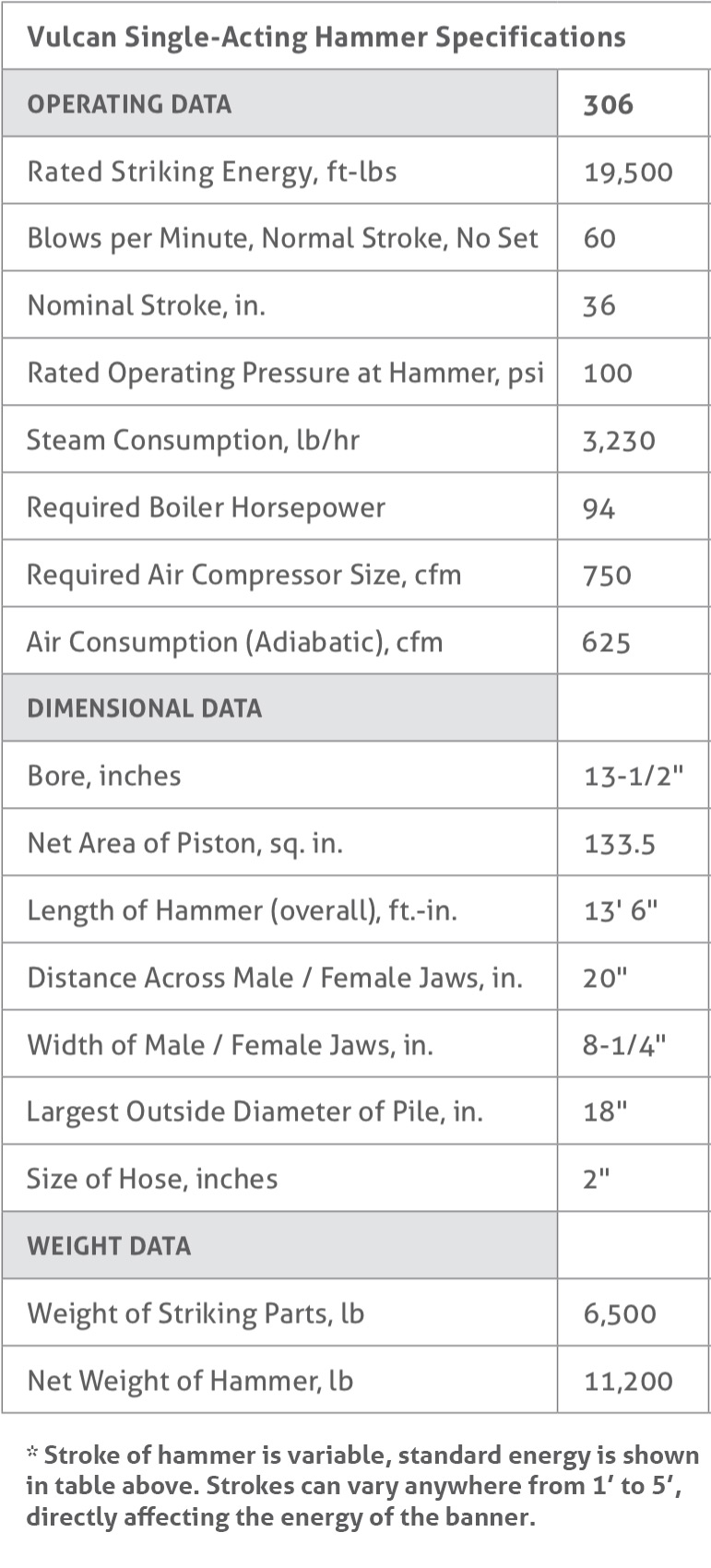
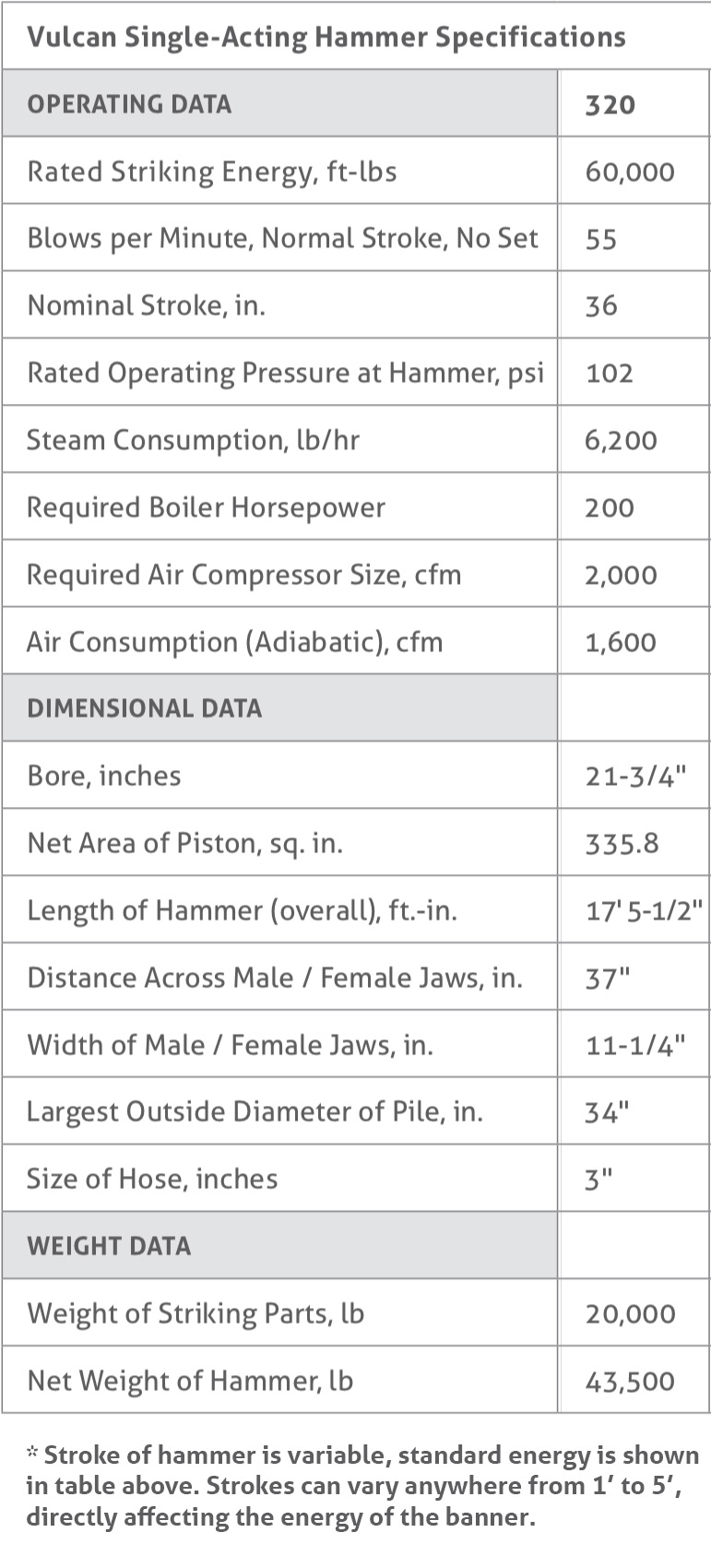
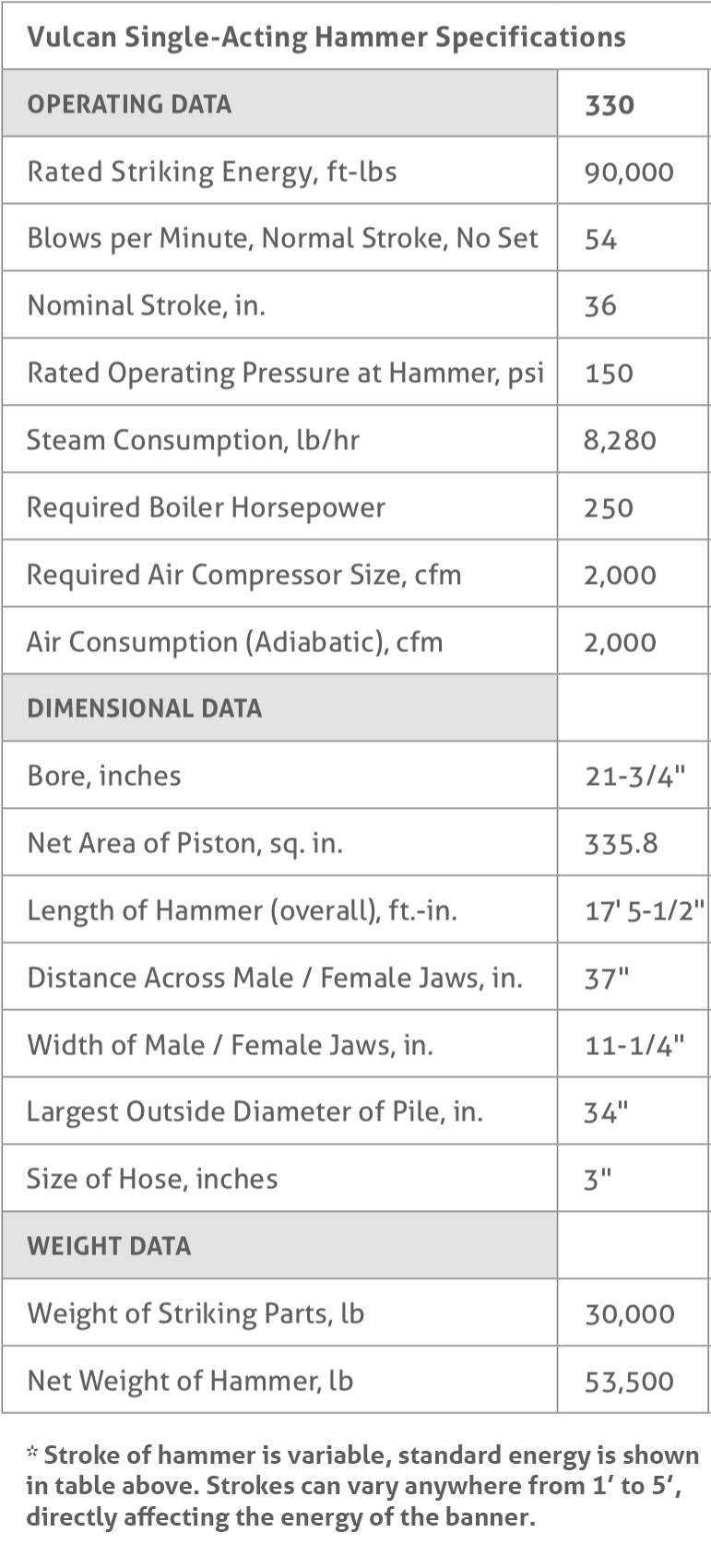
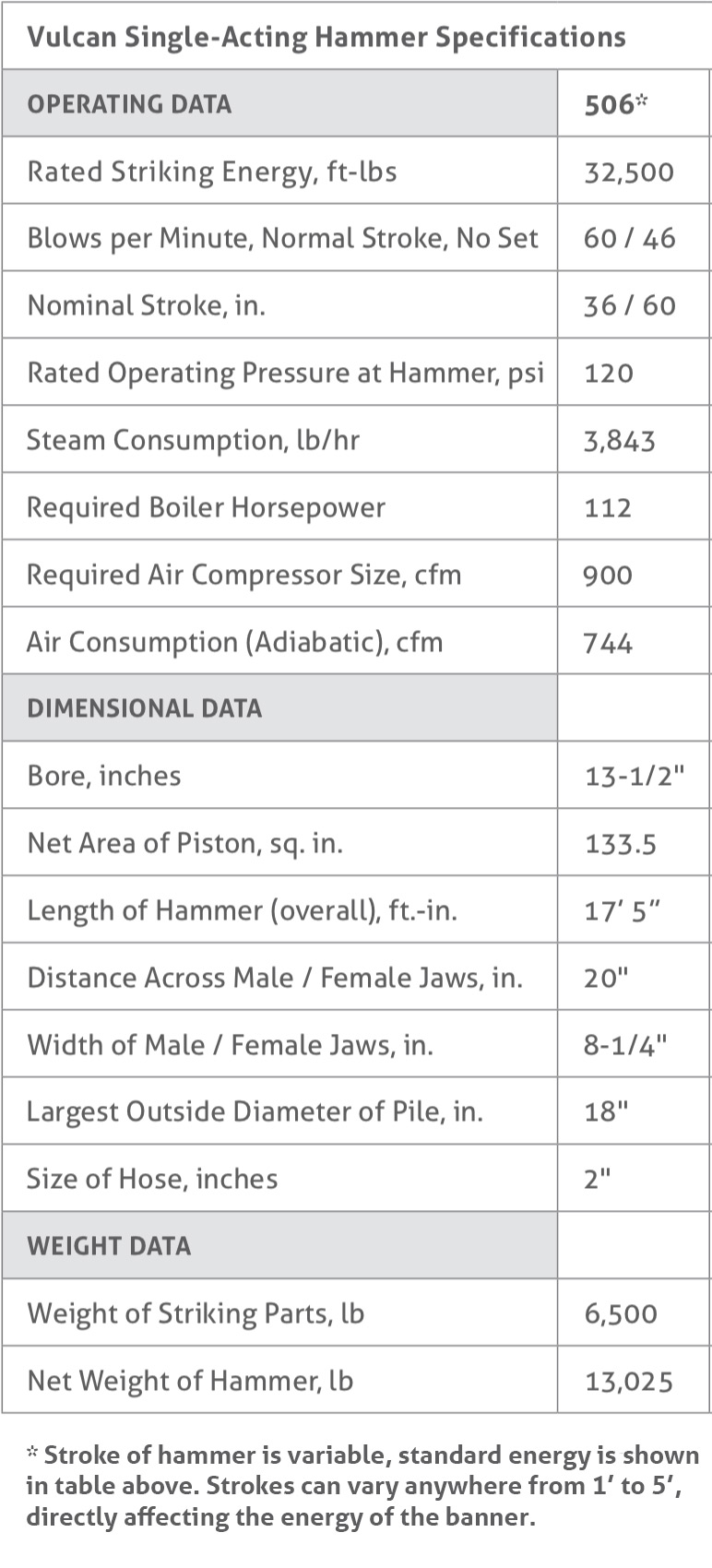
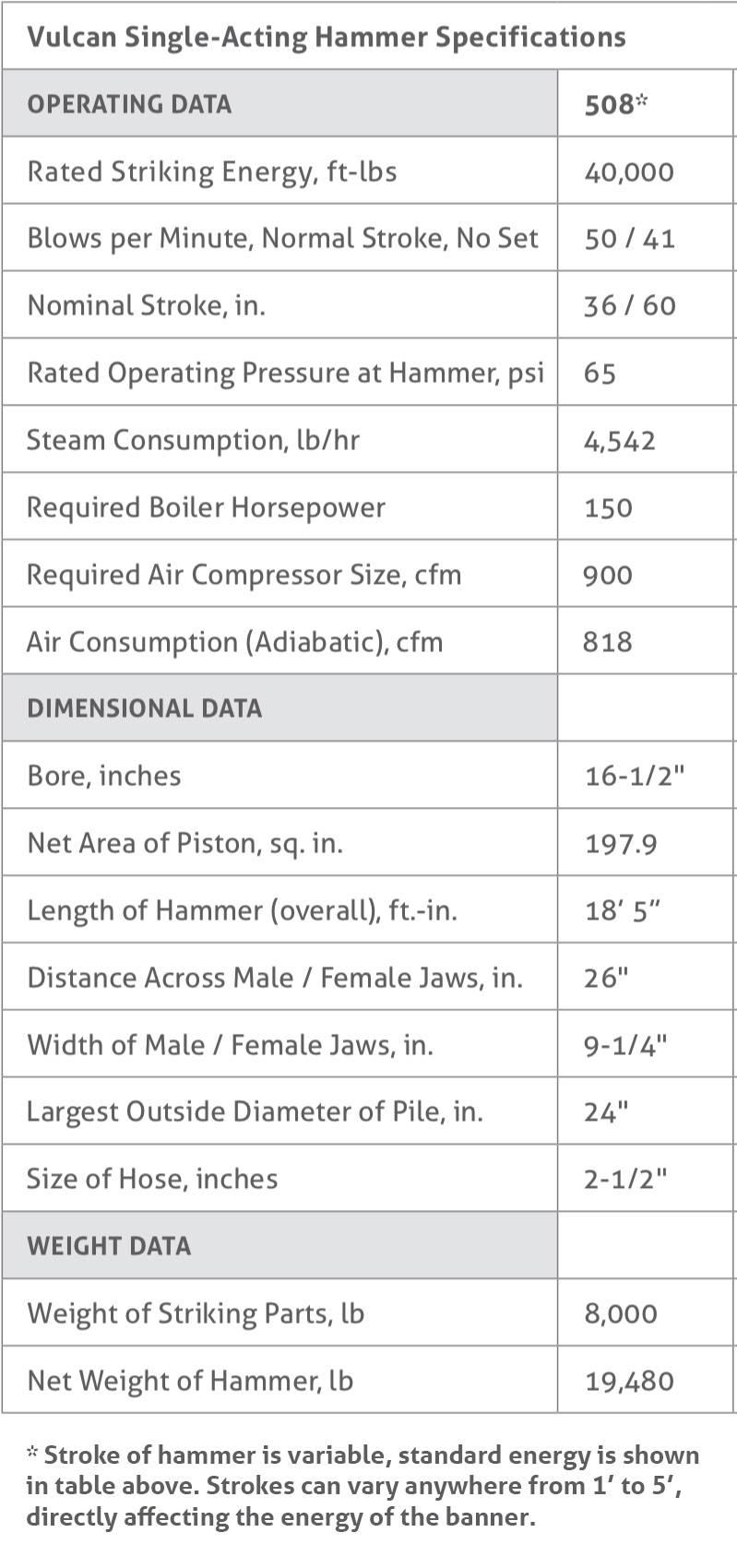
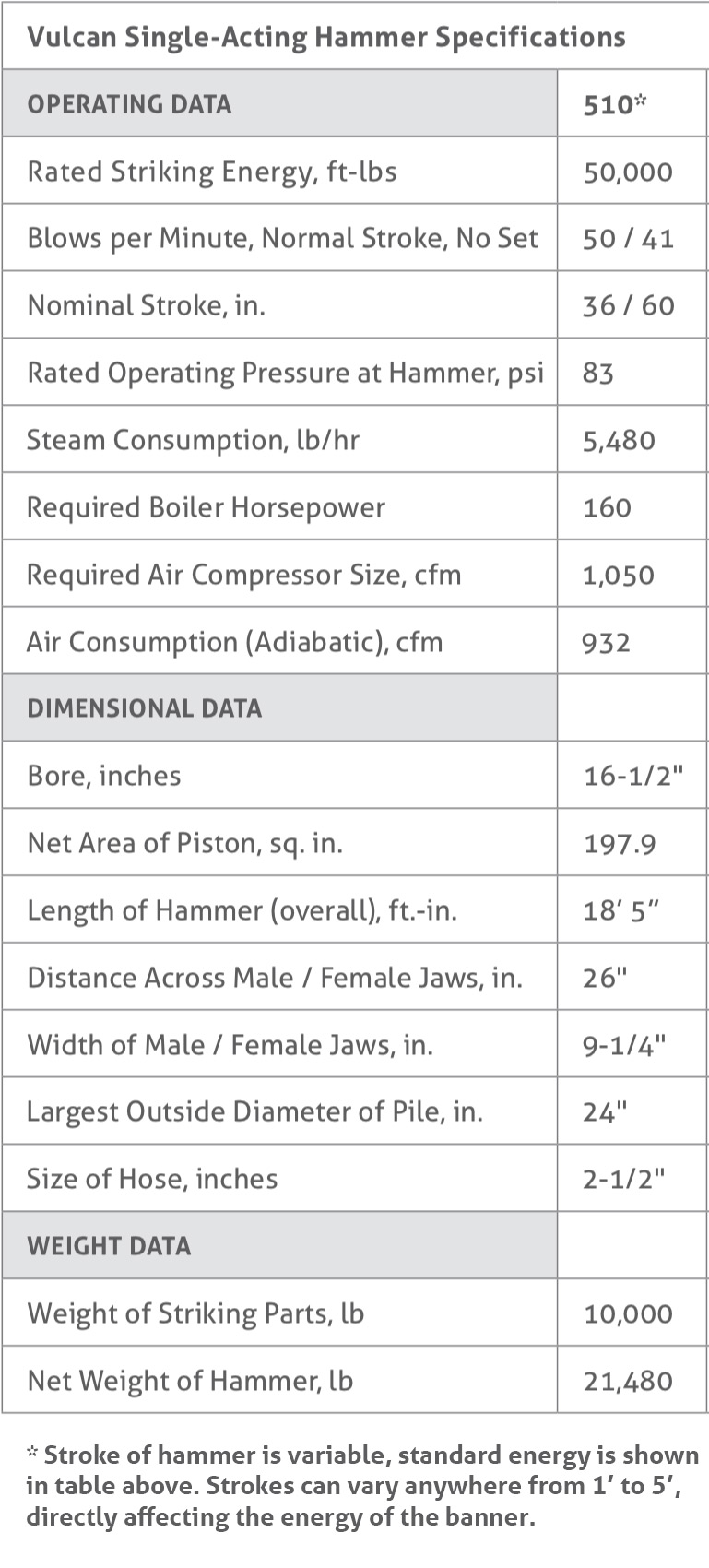
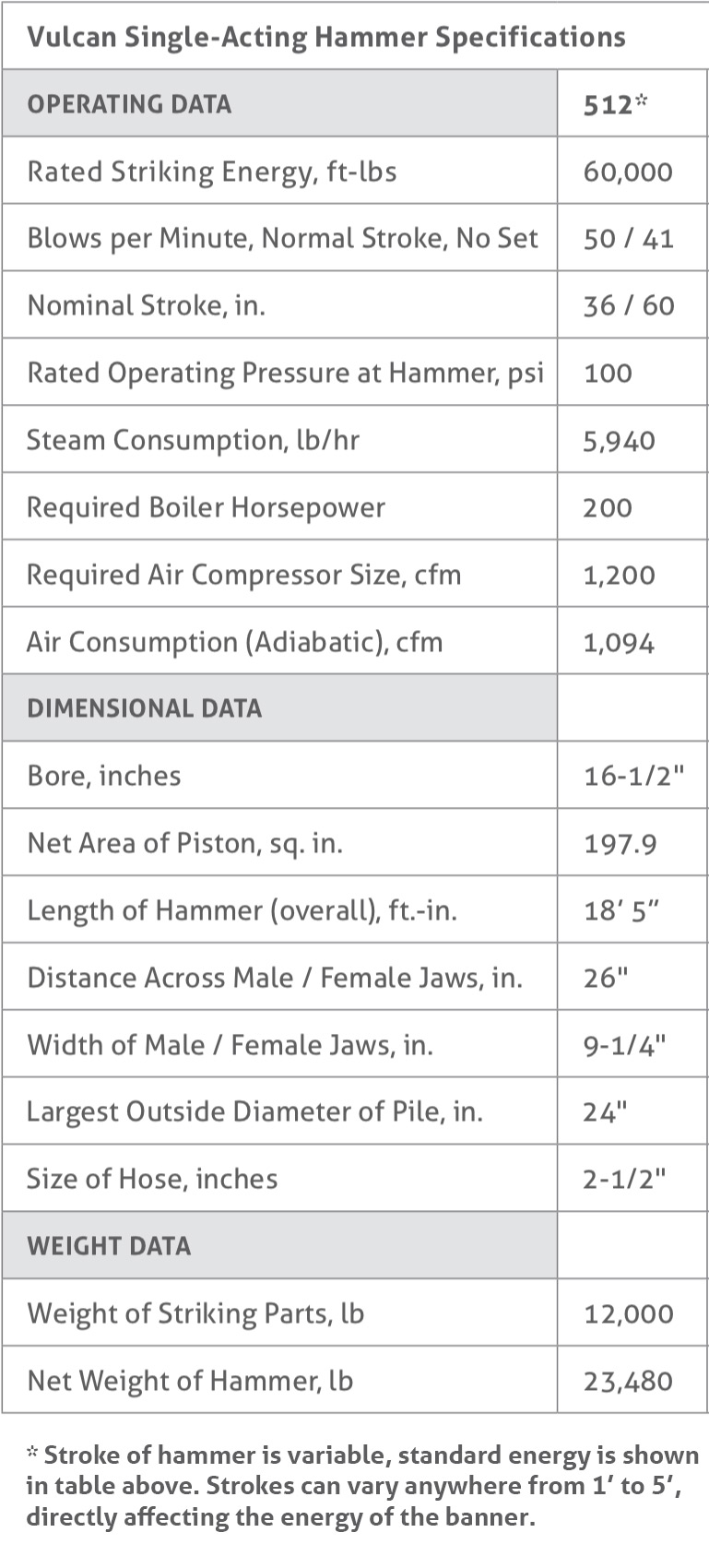
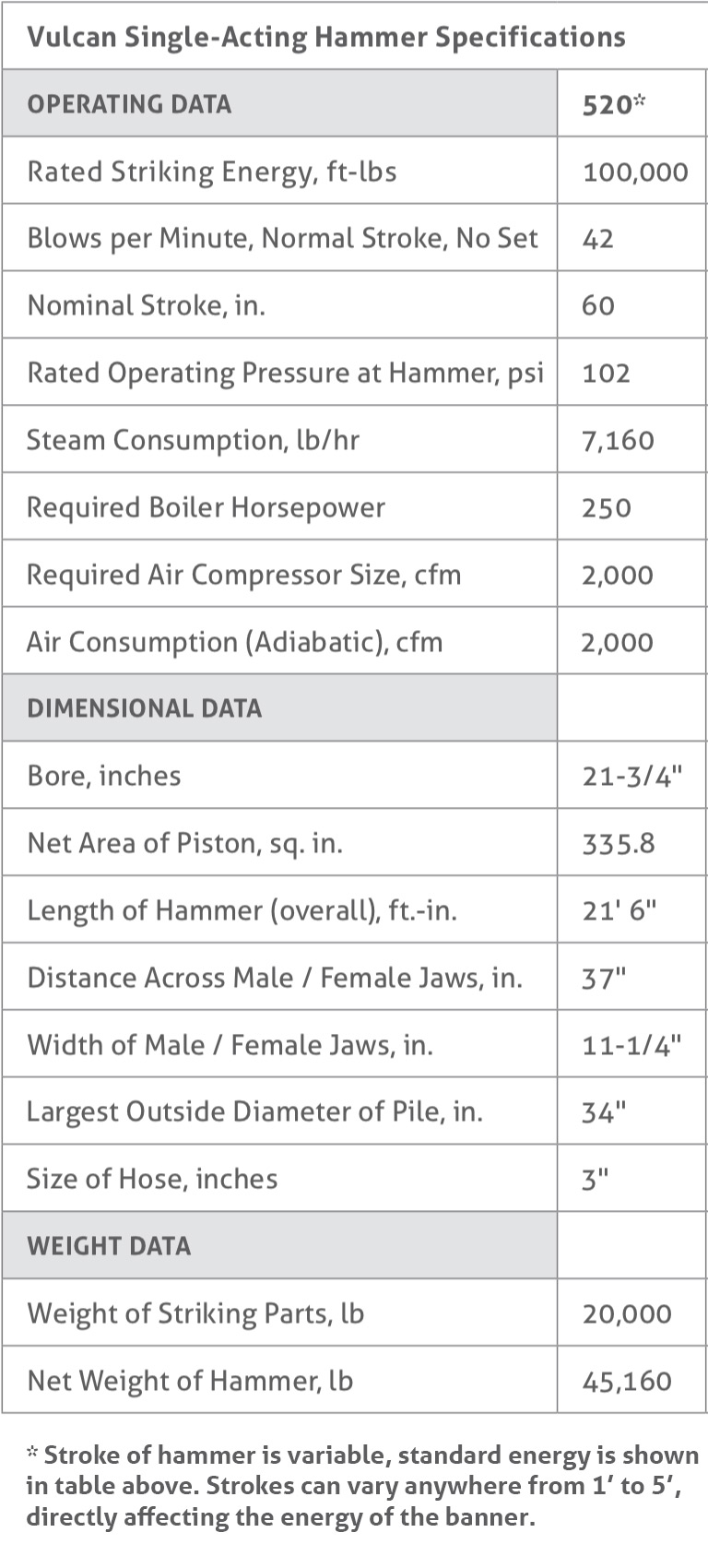
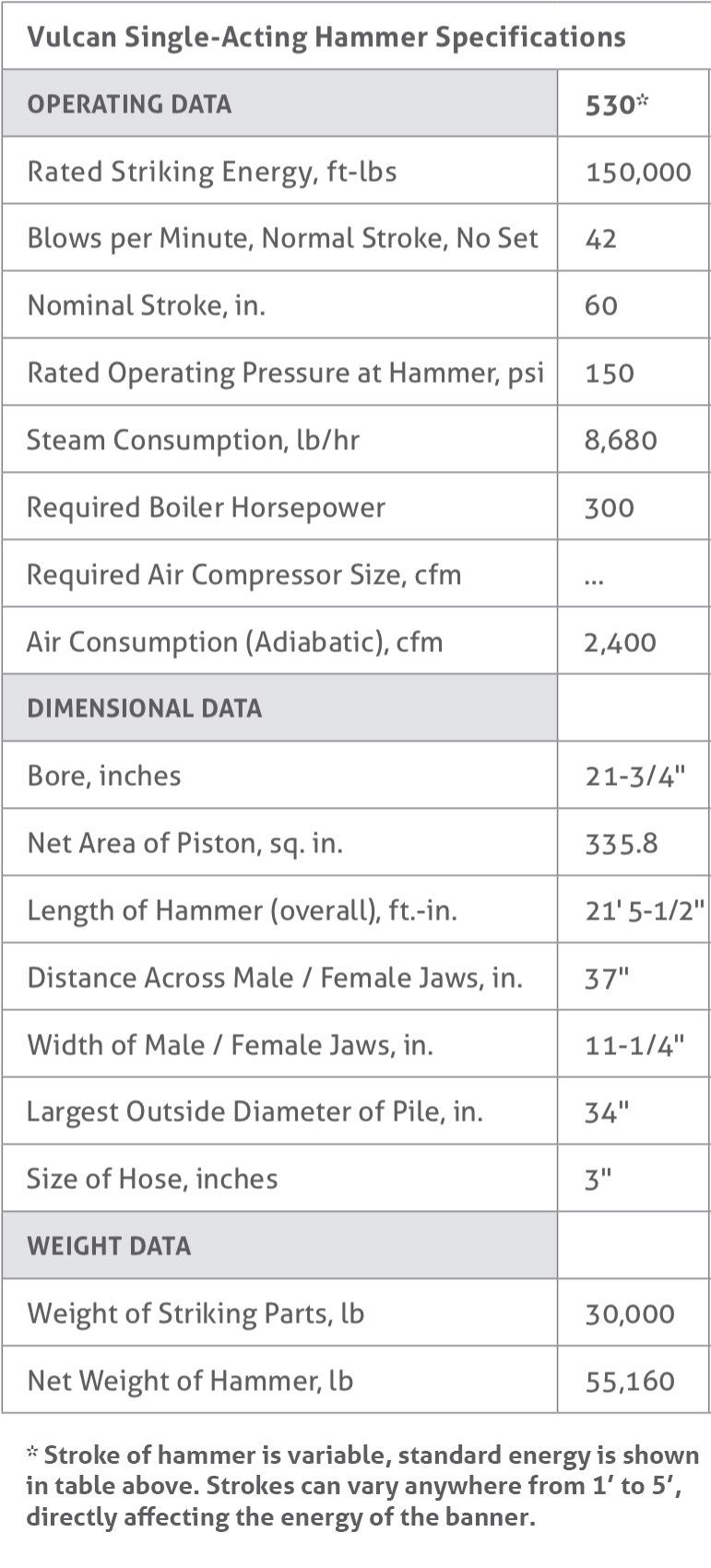
VersatilityWhile all of the Vulcan air/steam hammers have the same basic operating principle, there are variations within the various lines that enable the contractor to select the optimum hammer for the application. These variations are as follows: Three (3) Foot Stroke Hammers: This includes hammers with 36" (914mm) stroke. These are the original Vulcan air/steam hammers; they combine a heavy weight with a low striking velocity, and are especially apt for concrete piles where tension cracking is always a danger. These include the #1, 306, 08, 010, 012, 014, 016, 320, and 330 hammers. Five (5) Foot Stroke Hammers: These all have a stroke of 60" (1524mm). These were designed to give the contractor a relatively light hammer and thus enable the contractor to use lighter piling rigs. They are also effective with steel piling. These include the 505, 506, 508, 510, 512, 520, 525, 530 and 535 hammers. |
Operating PrincipleThe cycle begins at impact, the valve is rotated in such a way as to admit steam or air into the cylinder and below the piston. This accelerates the ram upward as shown in View 1. This continues until the exhaust wedge on the slide bar actuates the trip and rotates the valve to close off the steam or air inlet and opens the area of the cylinder below the piston to the atmosphere where the compressed air or steam is exhausted. The ram continues its free rise upward, decelerating with gravity until the top of the piston passes the relief ports and closes in the dashpot at the top of the cylinder. This trapped air, shown in View 2, compresses and brings the rising ram to a halt. The ram then makes a free drop to impact. Shortly before impact the intake wedge rotates the valve to admit steam or air to the cylinder and the cycle starts once again. |
![]() |
FeaturesVulcan hammers include many features that are designed into the hammers to make them simple to use and maintain. Following are some of these features:
|
|
|
a subsidiary of Pile Hammer Equipment Corporation
|
Vulcan
Foundation Equipment
|
Copyright © 2001-2010 Vulcan Foundation Equipment. All rights reserved.
|
||